

You may have noticed fewer technophiles sporting wired headgear in recent months. Personal connectivity enthusiasts have been applauding the arrival of Bluetooth technology that allows wireless networking between mobile devices and headsets.
It was not very long ago that the vast majority of tech professionals — especially Gen Xers — seemed to have a black wire running down their shirts or into their pockets connecting an array of earpieces and headsets to mobile phones. A few spilled cups of coffee or inappropriately timed tugs on a short tether proved to be the downfall for many of these gadgets, while comfort and sound quality seemed an afterthought in all but the highest-priced models.
Tom Hanson, director of channel marketing for headset manufacturer Jabra, told NewsFactor that “the real solution that people have been waiting for is the one that doesn’t require a wire.”
Sweet Spot for U.S. Bluetooth Headsets
European handset giants Ericsson, Siemens and Nokia have taken the lead in bringing new phones with Bluetooth functionality to market over the last year. But it could be the FreeSpeak Bluetooth headset line from Jabra that will jump-start the adoption of Bluetooth technology in the largely untapped U.S. market over the next several years.
The San Diego, California-based company simultaneously released a US$99 version of its headset for Bluetooth-enabled handsets and a $179 version that enables non-Bluetooth phone users to experience the cord-free lifestyle. An adapter that plugs into a 2.5mm audio jack should motivate owners of high-end phones that lack onboard Bluetooth capability to give the technology a try.
Blue Yonder
“Bluetooth headsets will receive an important boost from price-point declines down to $100,” IDC smart handheld device analyst Alex Slawsby told NewsFactor, but he predicted that it will be closer to 2004 or 2005 when “the whole concept of ‘Bluetooth’ enters into the consumer consciousness and opens up the broad base of mobile phone users to buying such headsets.”
Web purchases of FreeSpeak products have been brisk since the line’s September launch, and it is likely that more retailers will add FreeSpeak offerings to their shelves.
Incorporating Bluetooth capability in ear-mounted headsets to enable hands-free and wire-free communications is the textbook example of the technology’s use. With connection ranges of up to 30 feet, users can speak, take notes, drive or otherwise move about while their handset remains in a purse, on a desk or inside a briefcase.
Price and Performance
Equal parts intuitive, aerodynamic design and ergonomic flexibility (“eargonomic” in Jabra-speak) seem to have gone into FreeSpeak’s creation, which checks in at just under an ounce. The tiny boom microphone on the smooth silver-and-black headset extends only to mid-jaw and can be attached to either ear. The location of the answer/end button, volume controller and LED status indicator, as well as the interpretation of the audible beep alerts, will take a few minutes to get accustomed to but should easily become routine.
The FreeSpeak unit ships with three bright blue MiniGel ear inserts, designed specifically to funnel sound directly to the user’s ear while filtering distractions from such noisy environments as shopping malls or airports. Sound quality and price are the dual claims to fame for Jabra’s wired headset products, and the company’s reputation should remain intact with FreeSpeak.
Included with every headset is a multi-adapter/charging cradle that typically fires up the rechargeable lithium polymer battery in about two hours, allowing talk times approaching three hours and standby time of nearly 100 hours.
Mobile phone manufacturers have marketed headsets as accessories for specific Bluetooth-enabled phones with more success in Asia and European markets than in the United States, where it looks like 2003 will be the year that both Bluetooth phones and headsets finally gain some traction. The Jabra product should compete well against accessories from Sony Ericsson, Nokia and Hong Kong’s Bluetrek.
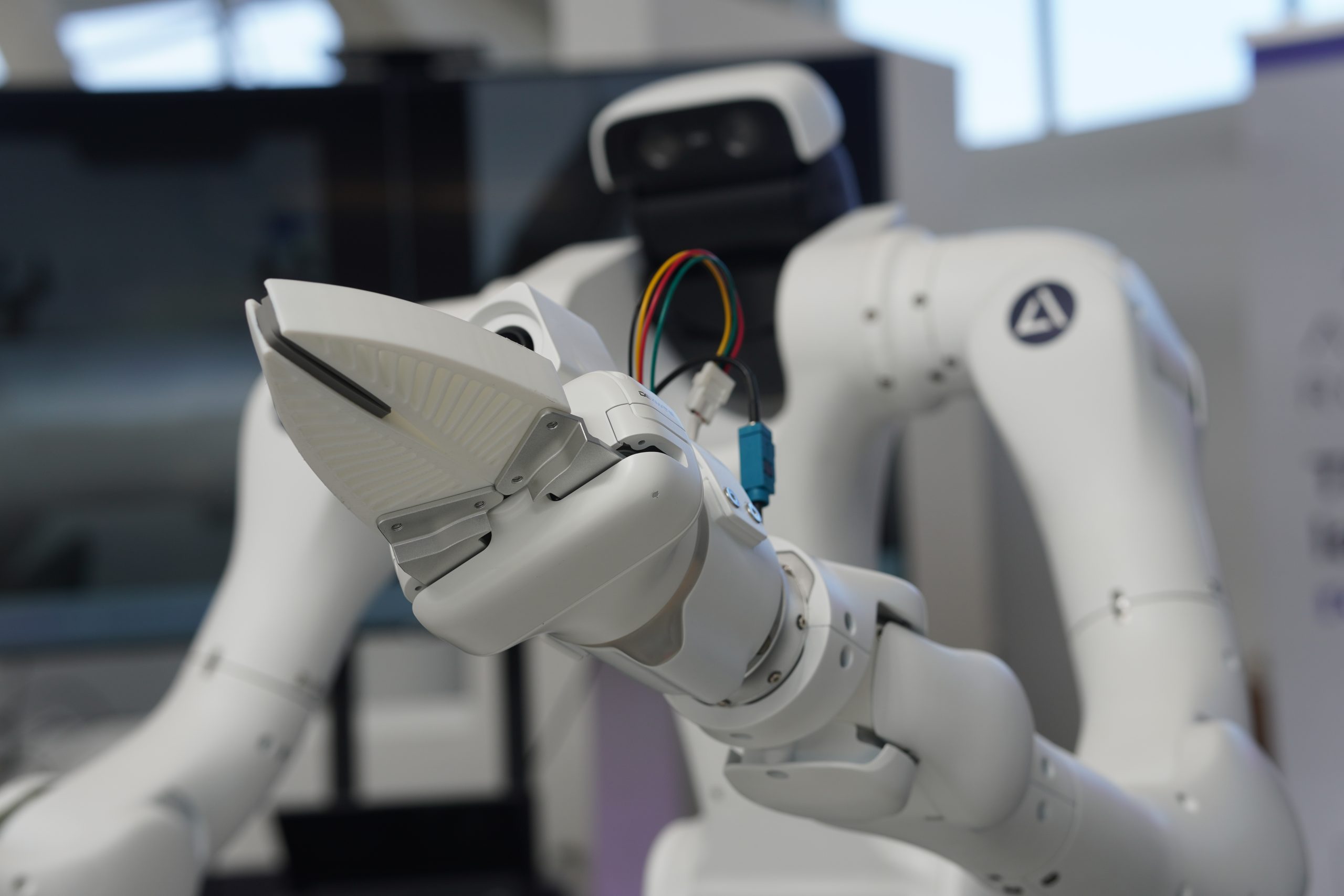
A specialized technology stack is beginning to form around Physical AI. At Actuate 2026, developers got a close look at its emerging data, simulation, training, observability, compute and teleoperation layers, offering a glimpse of an ecosystem being assembled in real time.

The firms that rewired the digital world now aim to transform the physical one. And just as they did with digital transformation, the consulting giants are positioning themselves to support this next era of enterprise reinvention.