

For well over a decade, the world’s major consulting firms have rallied around one grand narrative: digital transformation. The mandate was clear: modernize legacy systems, migrate to the cloud, automate back-office workflows, centralize data, and turn every business into a software-centric organization. From ERP modernization to DevOps to analytics-at-scale, the Big Four and global professional-services firms built billion-dollar practices around helping enterprises remake themselves in the digital image.
As we approach the end of 2025, something fundamental is starting to shift. The center of gravity is moving from purely digital to deeply physical, or at least, physical spaces are moving into the enterprise tech stack. For the first time, enterprises outside hardcore robotics sectors are being asked to position themselves for a future that accounts not only for the evolution of their software stacks, but for how their operations work in the real world.
This emerging wave pushes AI out of the cloud and into factories, warehouses, hospitals, logistics centers, job sites, and retail environments. It combines robotics, sensors, autonomy systems, digital twins, and world models to create intelligent physical processes, not just digital ones. And just as they did with digital transformation, the consulting giants are positioning themselves to support this next era of enterprise reinvention.
Beyond Dashboards and Data Centers
Today’s consulting giants built their reputations and their multibillion-dollar practices by helping enterprises migrate to the cloud, modernize software stacks, digitize workflows, and adopt analytics at scale. Digital transformation became the catch-all mandate that reshaped IT budgets, workforce strategies, and operating models.
But the limiting factor in enterprise productivity may no longer be software alone. You may have noticed the pressure points building in the physical world:
- The warehouse that couldn’t hire enough workers.
- The factory struggling with variability.
- The field operation that couldn’t instrument its environment.
- The supply chain that couldn’t “see” itself in real time as COVID disrupted everything.
That is why the same firms that guided the cloud revolution are now pouring resources into robotics labs, simulation studios, and physical-AI platforms. They are extending transformation from screens to sensors, from workflows to “workcells,” from dashboards to digitized environments that can be modeled, optimized, and automated. The playbook that once applied to software is being rewritten for fleets of robots, digital twins of industrial assets, and AI-driven systems that perceive and act in the real world, turning PowerPoint strategies into labs, pilots, and deployed systems.
What was once a realm dominated by startups and research labs is now being claimed by the largest professional-services organizations on the planet. They don’t just want to advise. They want to build.
The Big Who?
The term “Big Four” still refers to the original group of dominant audit- and accounting-based professional services firms: Deloitte, PwC, EY, and KPMG. These remain formally known as the Big Four, but the label no longer captures the full landscape of global consulting, especially when the topic is Physical AI.
The Big Four still dominate the traditional accounting and advisory landscape, but technology and transformation consulting now extends well beyond them. Accenture and Capgemini compete alongside Deloitte, PwC, EY and KPMG for large-scale technology programs, while firms such as McKinsey, BCG and Bain increasingly overlap with them in AI strategy and transformation.
In technology and transformation consulting, the classification shifts again toward what are called Global Systems Integrators. This group includes Accenture, Capgemini, Tata Consultancy Services, Infosys, Cognizant, Wipro, Deloitte, and IBM Consulting. These firms are often referred to as Global SIs, GSIs, Tier-1 consultancies, or global technology consulting firms, terms that show up frequently in conversations about AI, cloud modernization, data platforms, robotics, and now Physical AI.

Many simply refer to them as “the big consulting firms” now. There is no fixed number because the term now recognizes a market that spans the audit-based giants, the strategy houses, and the global technology integrators. In Physical AI, these are the organizations that have the scale, partner ecosystems, and balance sheets to turn pilots into multi-year transformation programs.
From Pencils to World Models
The transformation of the big consulting firms themselves, from their audit and accounting roots to today’s technology practices, serves as a bellwether for major shifts in enterprise technology and adoption.
My brother and I used to tag along with my father on occasional and unofficial bring-your-children-to-work-days during his career at Marine Midland Bank headquarters in Buffalo, NY. (My sister must have been too young to accompany us.) Those random Saturday mornings meant running up and down long hallways, drawing in oversized accounting ledgers, opening office supply cabinets and getting into the kind of trouble that started with sharp red and green accounting pencils. And we had plenty of those pencils at home too. Implements from an earlier era. Specifically, his time at Ernst & Ernst, a predecessor to Ernst & Young (now EY). I can only imagine what we might have found on a given Saturday morning at the new EY.ai Lab in Alpharetta, GA, where the tools of the trade are now digital twins, robot testbeds, and foundation models instead of ledger paper.

The contrast is the point: the same institutions that once optimized paper-based accounting workflows are now investing in platforms that simulate entire facilities, orchestrate fleets of robots, and generate synthetic data to train perception systems. Their own journey, from pencils to world foundation models, mirrors the enterprise transformation they now want to lead.
What “Physical AI Transformation Services” Might Look Like
Behind almost all of these consulting plays is a converging technology stack from NVIDIA.
- Cosmos is positioned as a platform purpose-built for physical AI, offering world foundation models, data curation pipelines, and synthetic-data tools for robots, autonomous vehicles, and video agents.
- Omniverse has evolved into a kind of “physical AI operating system,” where industrial software vendors and consulting firms build digital twins, run simulations, and generate synthetic data.
- Isaac provides simulation frameworks and robot foundation models like Isaac GR00T N1 for humanoids and industrial robots.

The big consulting firms want to become the systems integrators for Physical AI, wrapping these platforms in strategy, change management, and custom development. Put all of this together and a new consulting category starts to come into focus. Typical services could include:
- Physical AI strategy and roadmapping: Design where to start with robots, autonomy, and digital twins; build the business case; phase pilots and rollouts.
- Digital twin and simulation labs: Stand up environments in Omniverse and similar platforms to test factory, warehouse, or site changes before spending on hardware.
- Robotics and hardware integration: Select robot platforms, sensors, and edge compute; integrate them with existing OT and IT systems.
- World foundation model and data work: Use Cosmos-style models to generate synthetic data, improve perception systems, and accelerate training of robot policies.
- Change management and workforce design: Redesign roles, safety processes, and training so humans, robots, and AI agents can work together safely and productively.
- Ongoing operations and optimization: Tune layouts, flows, and AI policies as real-world data streams in, and expand successful pilots to multiple sites.
The big shift is not that consulting firms are suddenly in love with robots. The shift is that Physical AI is being treated as an enterprise-scale transformation, with labs, named leaders, partner ecosystems, and multi-year programs behind it. It is another signpost on the trail marking the emergence of Physical AI, and we are not turning back.
The real question for enterprises now is not whether Physical AI arrives, but which partners they will trust to wire their physical operations into their AI stack.
Further Reading
EY announces rollout of new physical AI platform, opening of EY.ai Lab and EY Global Robotics and Physical AI leader appointment
December 3, 2025
EY is launching a new NVIDIA-powered physical AI platform, along with the EY.aiLab in Alpharetta, GA to help enterprises simulate, deploy, and manage robots, drones, and smart-edge devices at scale using digital twins and AI-ready data. The platform focuses on structured, end-to-end lifecycle support for physical AI—from strategy and safety to implementation and maintenance—across sectors like industrials, energy, consumer, and health. EY has also appointed former UPS Robotics AI Lab leader Dr. Youngjun Choi as EY Global Physical AI Leader to spearhead robotics strategy and position EY as a trusted advisor in this fast-moving space.
Deloitte’s “Robotics & Physical AI: Tech Futures” report
November 11, 2025
Deloitte’s report suggests that the next wave of transformation is driven by intelligent machines that can perceive, reason, and act in the physical world, from humanoids and quadrupeds to autonomous vehicles and warehouse robots. It introduces a “Physical AI 6Ps” framework—Prepare, Perceive, Process, Perform, Proceed, and Potential—to help leaders design strategies, architectures, and operating models for these systems. The report emphasizes that human capital readiness, workforce reskilling, and new approaches to safety and governance are as critical as the technology itself as robots move from labs into everyday operations.
BCG and the WEF: Physical AI for Industrial Operations
September 2025
Boston Consulting Group has leaned into Physical AI via its partnership with the World Economic Forum. The joint report “Physical AI: Powering the New Age of Industrial Operations” focuses on intelligent robots that perceive, reason and act as they reshape industrial value chains. BCG’s executive perspectives on AI in manufacturing highlight AI-driven robots, digital twins and self-optimizing systems as central to next-generation plants.
(McKinsey Global Institute) Agents, robots, and us: Skill partnerships in the age of AI
Physical AI in McKinsey’s report refers to AI-enabled robots that can perceive, reason, and act in the physical world, working alongside humans rather than replacing them. The analysis highlights new “skill partnerships” where people provide judgment and social intelligence while robots and embodied AI systems handle repetitive, hazardous, or precision tasks in logistics, manufacturing, healthcare, and beyond. It also stresses that scaling physical AI safely will depend on advances in dexterity, sensing, and regulation, as well as investment in reskilling so workers can design, supervise, and collaborate with these systems.
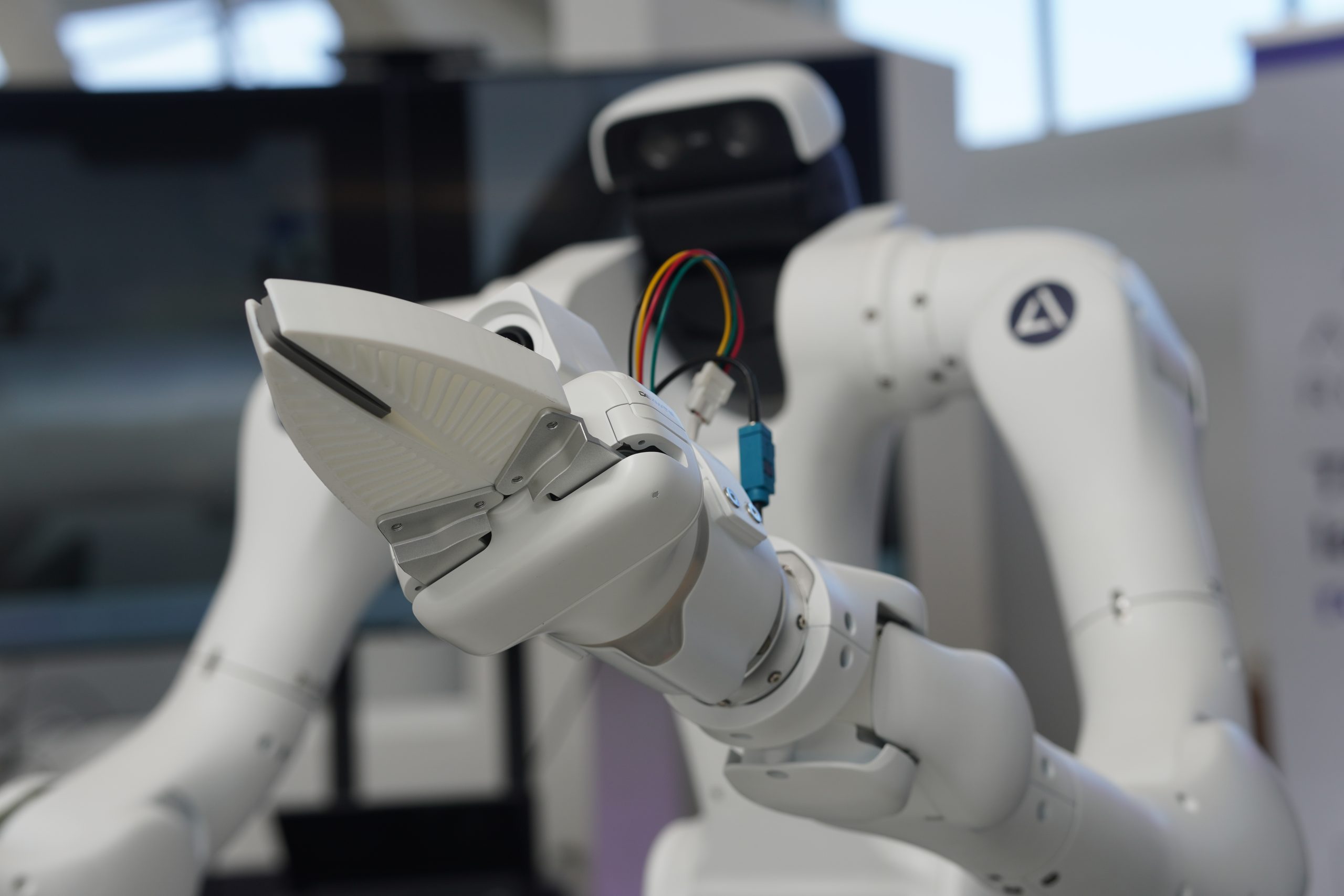
A specialized technology stack is beginning to form around Physical AI. At Actuate 2026, developers got a close look at its emerging data, simulation, training, observability, compute and teleoperation layers, offering a glimpse of an ecosystem being assembled in real time.

The firms that rewired the digital world now aim to transform the physical one. And just as they did with digital transformation, the consulting giants are positioning themselves to support this next era of enterprise reinvention.
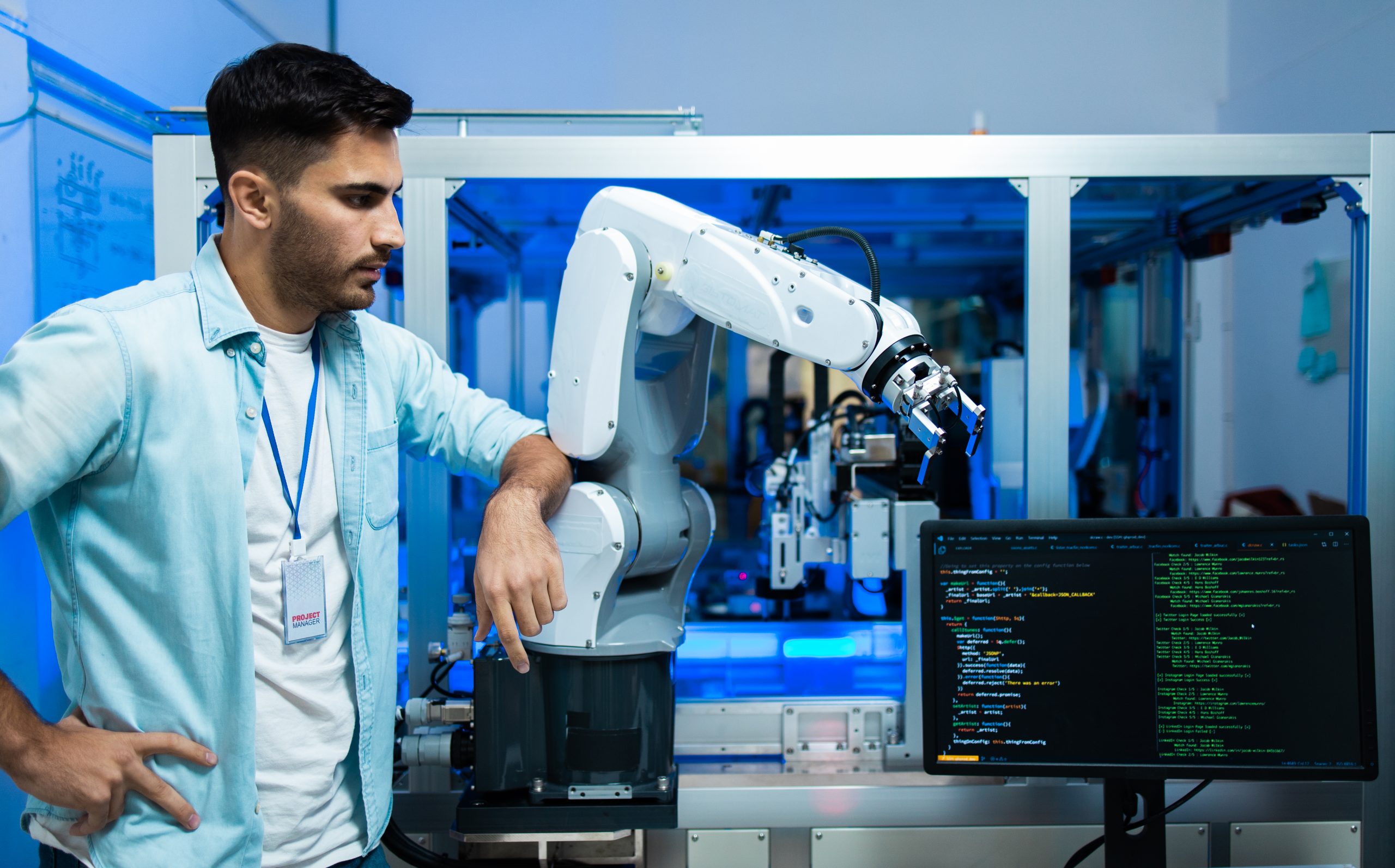
Physical AI is a developing, self-defining segment that will be inescapable in 2026 and I can’t get enough of it. Let’s hope we come to a consensus about what it is, who the players are, and where the ecosystems are forming.