

Despite the rollout of the Sprint PCS Vision network and heavy doses of accompanying advertising, it will still take several years before wireless photography, MMS (multimedia messaging system) images, mobile games and polyphonic ringtones become familiar and comfortable options for most U.S. consumers. But the introduction of Hitachi’s first U.S. phone is a clear indication that the market for these services is ripening.
Sprint’s Vision campaign is among the more progressive attempts to increase awareness and demand for the types of advanced multimedia services that have been all the rage in Japanese and Korean markets. And Hitachi’s new P300 mobile phone is easy on the eyes.
The company’s P300 has been available in Sprint stores since October and sells for US$299. The Tokyo manufacturing giant has joined the ranks of other high-profile Asian vendors in Sprint’s PCS Vision lineup, including Sanyo, Samsung, LG and Kyocera. Lessons learned overseas have been applied in the design of the new Hitachi phone, which is built specifically to enable some of the more robust capabilities available through PCS Vision in America.
“The Hitachi P300 mobile phone is an ideal handset for Sprint PCS Vision customers,” Kenny Hasegawa, manager of Hitachi’s Digital Media Systems Sales Division, told NewsFactor. “The device’s advanced functions — such as POP3 e-mail, Web browsing capabilities and full-color TFD screen — take full advantage of the Vision service.” He said the handset’s speakerphone, 7-color LED caller-ID and environment-switch “separate Hitachi from the masses.”
Big Screen Debut
The dynamic colors produced by the large screen are likely to catch the eyes of potential business and consumer shoppers who evaluate full-featured phones and are interested in taking advantage of the newest data services. Accommodating eight lines of text, the visual appeal of the Hitachi screen is best appreciated when moving through the icon-driven user interface, experimenting with CMX-MIDI v2.2 animated ringtones, viewing JPEG images or playing games.
Voice-activated dialing, an internal 200-entry phonebook, customizable photo caller ID, a USB (universal serial bus) interface, built-in speaker phone and many of the other high-end features available on U.S. handsets are standard in the P300. A light sensor built into the device automatically increases the ringer volume when the phone is stored in a purse or briefcase.
Weighing in at 3.6 ounces, the P300 is a lightweight full-size phone (5.12″ x 1.73″ x .87″) that fits comfortably even in larger hands. It provides 3.5 hours (201 minutes) of talk time and a full 10 days on standby. Like many phones that ship with GPS (global positioning system) capability, it may be some time before there are compelling location-based services that take advantage of its full functionality.
Targeted Focus for U.S. Launch
Charles Golvin, a senior analyst with Forrester Research, applauds the design. “The optical sensor for automatic ring volume adjustment is a nice innovation,” he told NewsFactor. “Hitachi appears to have taken a very targeted focus, using CDMA2000 (code division multiple access) technology — common to at least one Japanese carrier — and aiming for enterprise customers with a high-resolution display, built-in POP3 mail client, USB connector, and assisted GPS for location detection.”
Golvin said he expects Hitachi’s product line will evolve slowly in the United States as the company gauges response, “and that other Japanese vendors, such as NEC, may then follow suit.”
The Hitachi P300 compares well with other full-size phones in its price range and will provide its owners with the opportunity to delve into all of the offerings of the new Sprint network.
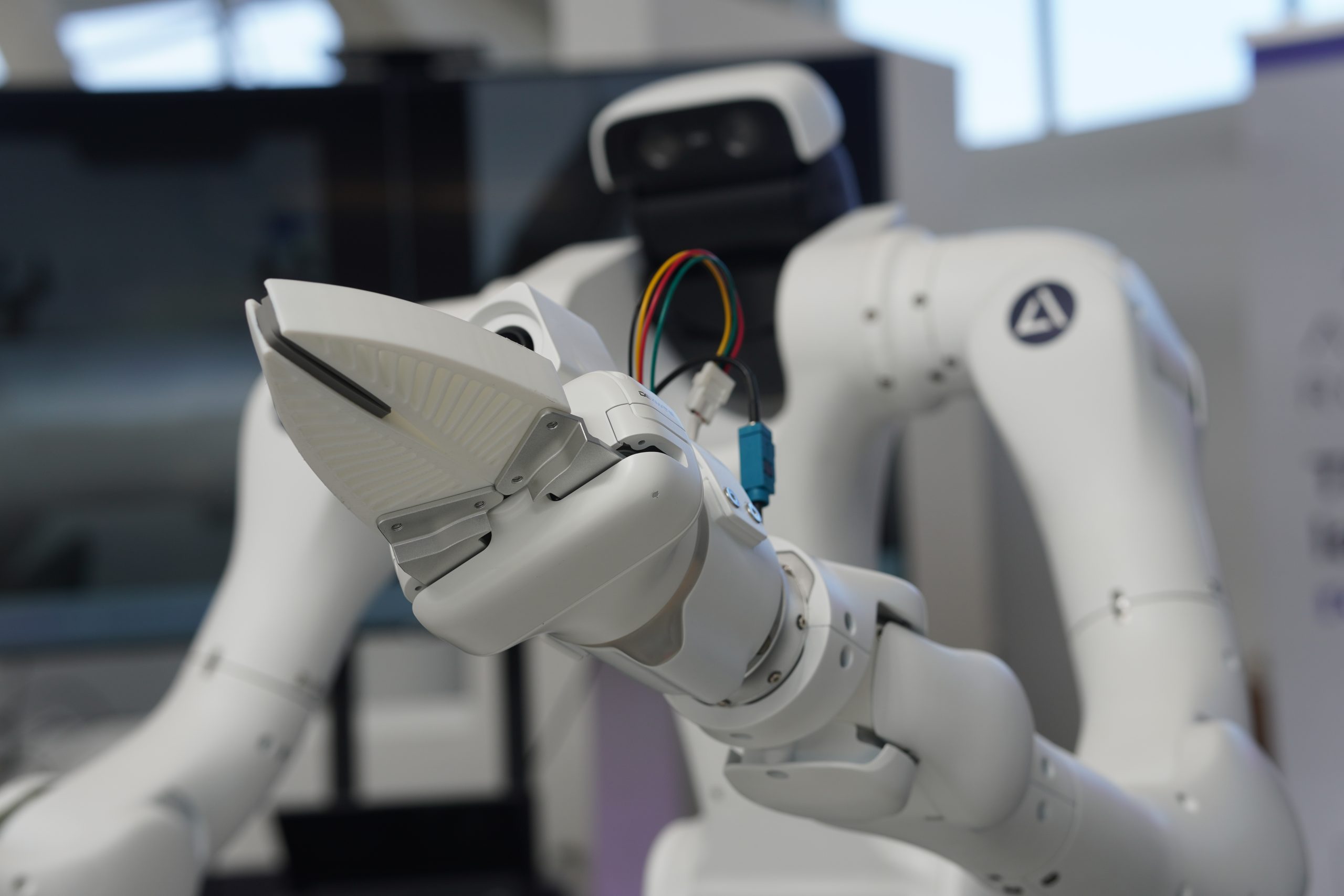
A specialized technology stack is beginning to form around Physical AI. At Actuate 2026, developers got a close look at its emerging data, simulation, training, observability, compute and teleoperation layers, offering a glimpse of an ecosystem being assembled in real time.

The firms that rewired the digital world now aim to transform the physical one. And just as they did with digital transformation, the consulting giants are positioning themselves to support this next era of enterprise reinvention.