
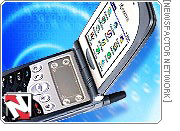
Call them communicators, hybrids or even smartphones, as both Kyocera and Microsoft do; just call them often. Hope springs eternal in the industry’s converged voice-data development labs, and Kyocera aims to answer the call for a full-featured Palm smartphone with the evolutionary 7135.
Successful combination of the best features of a PDA, cell phone and entertainment gadgets is the brass ring that many wireless manufacturers still reach for, even though the market has yet to see its first runaway success. No company wants to miss out on the perceived demand — especially among enterprise customers — for the one device that can do it all.
Coming Sooner to America
Microsoft’s Smartphone platform will not find its way into a U.S. production phone until 2003, but a Siemens-branded device built on its PocketPC Phone Edition is the centerpiece of the recent Microsoft-AT&T Wireless alliance aimed at enterprise users.
The Sony Ericsson P-800, a device built on the Symbian 7.0 platform with an integrated camera and removable memory card, has been a hit on the trade show circuit, although it will not be released in the United States until early 2003.
Equally compelling is Kyocera’s newest Palm OS v4.1 smartphone, the 7135, which should be released within a few weeks. It will be priced competitively at US$500, on a par with similar Palm-based communicator devices, such as Handspring’s Treo 300 from Sprint PCS.
Building on Tradition
Kyocera has been a trailblazer in the pursuit of a killer smartphone, having released previous Palm-based hybrids, such as the QCP-6035 and its predecessor, the PDQ-800.
Who wears the pants in this marriage of voice and data is an important question in the design of hybrid communicators. Smart devices tend to be designed either as phones that feature PDA functionality or PDAs that are voice-enabled. This one is harder to define.
The Kyocera 7135 is a breed apart from what you have seen in the market so far. It is not a brick-size block or a standard PDA that you press against your face to talk into — and it is not a traditional handset with a tiny screen for its multimedia endeavors. It is truly unique.
“The 7135 builds on the standard-setting Kyocera smartphone legacy with a comfortable phone-first design, easy-to-use Palm OS, and seamless wireless connectivity to e-mail and [surf] the Internet,” Richard Goetter, senior product marketing manager at Kyocera Wireless Corporation, told NewsFactor.
Multimedia Possibilities
According to the company, the 7135 will ship with voice-activated dialing features, a speakerphone, two-way SMS (short message service) text messaging, Eudora e-mail, silent vibrating alert and three modes of Web access (HTML, Web Clipping and WAP, or wireless application protocol).
It also acts as a data fax/modem for notebook computers, continuing the tradition of earlier Kyocera models, but now leveraging faster CDMA2000 1X (code division multiple access) networks. The 65,000-color high-resolution screen is one of the best you will see on any Palm device other than the top Sony Clie PDAs. An expansion card slot, compatible with both multimedia card (MMC) and SD (secure digital) card standards, hints at all kinds of possibilities for map storage, presentation graphics and video files.
A business performer for sure, the 7135 also seeks to entertain its owner by incorporating an MP3 player and 16 MB of onboard memory.
Itchy Palms
“This is an excellent implementation of integrated functionality that optimizes for both phone and PDA function,” Forrester Research senior analyst Charles Golvin told NewsFactor. “It provides the fixed 12-button keypad necessary for one-handed operation, and it maximizes display space by intelligently locating the Graffiti input pad on the lower half of the clamshell. However, this remains a niche audience device.”
Make no mistake: If you put the 7135 in your pocket, you will not forget it is there. At 6.6 ounces, with its large color screen, it is not a lightweight device in any matter of speaking compared with the smallest phones at your local retailer. But it is a leap forward in Kyocera’s evolutionary smartphone campaign.
I used working models of the 7135 at CTIA’s Wireless IT conference in October and again at the San Diego Telecom Council’s Gadgetfest program this month. At each event, Kyocera staff were approached numerous times by loyal owners of QCP-6035s who cannot wait to get their palms on the new model.
How many sales that will translate into remains to be seen, but Kyocera’s highly anticipated 7135 certainly will generate significant interest from IT departments and Palm power users.
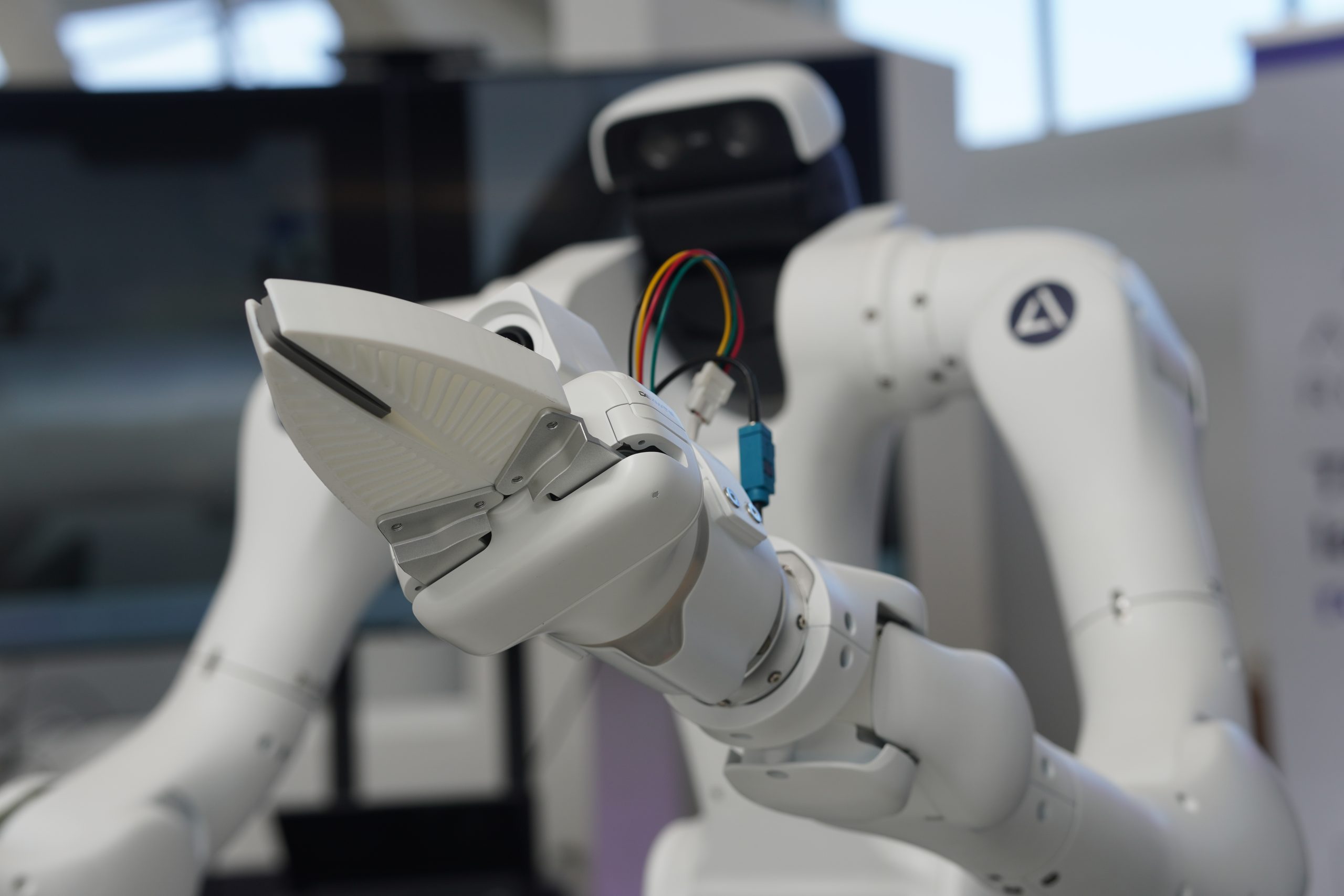
A specialized technology stack is beginning to form around Physical AI. At Actuate 2026, developers got a close look at its emerging data, simulation, training, observability, compute and teleoperation layers, offering a glimpse of an ecosystem being assembled in real time.

The firms that rewired the digital world now aim to transform the physical one. And just as they did with digital transformation, the consulting giants are positioning themselves to support this next era of enterprise reinvention.