

At the Consumer Electronics Show (CES) in Las Vegas, Nevada, Magis Networks proudly hosted live demonstrations of wireless high-definition television (HDTV) networks powered by its Air5 chipset.
Many of the large consumer electronics companies at the show are hoping to support wireless video as adoption of home wireless networks takes hold. And after many years of false starts and exaggerated promises, it appears that high-quality digital video can play a significant role in consumer environments if the right combination of technologies align.
Magis sits at the intersection of these two growth areas, arriving well before standards. Using the same unlicensed 5 GHz spectrum that is the foundation for the 802.11a wireless LAN (local area network) standard, Magis Networks has its own wild card in the form of a proprietary MAC (media access control) layer that is optimized for wireless delivery of high-quality video, TCP/IP data and audio throughout the home.
Although there is not yet a standard for 802.11 QoS (quality of service), many CES attendees felt that Magis could be holding a winning hand. The San Diego startup is backed by key strategic investors, including AOL Time Warner, Hitachi, Motorola, Sanyo and Panasonic.
Show Time
With claims that Air5-based networks can support several simultaneous streams of high-quality video, audio and TCP/IP data at ranges of up to 250 feet, the company has created a groundswell of interest. And with throughput of up to 40 Mbps, the company’s 5 GHz solution should continue to draw attention from video-oriented electronics manufacturers.
Samsung used an Air5-enabled wireless network to show off its high-end video displays at CES, with one of its set-top boxes wirelessly distributing an HDTV broadcast to a Samsung plasma display panel (PDP).
Similarly, Sanyo showed off one of its newest wireless 5.5-inch OLED (organic light-emitting diode) televisions, running on the Air5.
Putting Some Hi-Fi into Wi-Fi
The hype surrounding Wi-Fi has a lot to do with its ability to offer new industry solutions for end users of Internet-oriented content and e-mail.
“Unfortunately, standard 802.11 a, b and g protocols are data-centric, and bandwidth cannot be guaranteed,” Aberdeen Group research director Russ Craig told NewsFactor. This can cause such problems as visual artifacts and interruptions in the video display, he explained.
The Magis chipset uses a novel seven-antenna radio that operates in the 802.11a band, extending the useful range of the device, Craig said, adding that its MAC layer, which uses time domain multiplexing, guarantees continuity of the video stream.
What all this might mean for consumers someday is that their Internet data and video content will be seamlessly transmitted throughout the home on a continuous basis, with no apparent disruption in visual or audio quality. The market for next-generation consumer devices that can distribute cable and satellite video over the same wireless network that supports Internet access and file-sharing could be huge — and appears to be a goal for many in the business.
Will Manufacturers Wait?
“We developed the Air5 chipset to enable a single network in the home to serve up HDTV video, Internet data and audio,” Pete Fowler, executive vice president of Magis Networks, told NewsFactor. “Coming out at the Consumer Electronics Show with highly visible, successful demos with Samsung and Sanyo has shown the industry that it can be done, and with Air5.”
Aberdeen’s Craig said a standard wireless offering satisfactory for video is likely to evolve in the industry so that products can interoperate. “Magis is out front in that horse race,” he noted.
Arguably, there will be other technological approaches to achieve a similar solution. It may not be long before this type of technology is actually available to consumers. The market should only heat up from here.
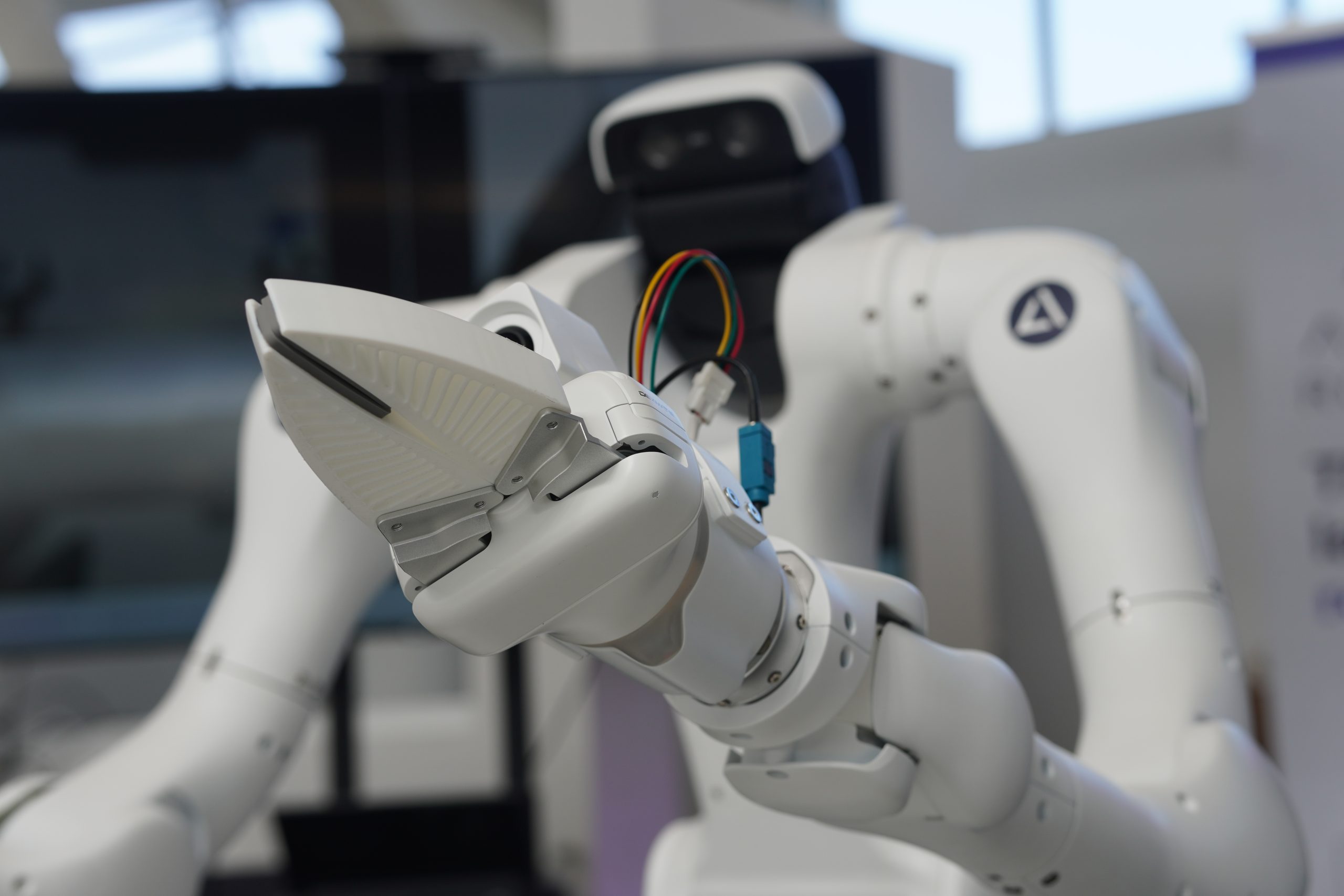
A specialized technology stack is beginning to form around Physical AI. At Actuate 2026, developers got a close look at its emerging data, simulation, training, observability, compute and teleoperation layers, offering a glimpse of an ecosystem being assembled in real time.

The firms that rewired the digital world now aim to transform the physical one. And just as they did with digital transformation, the consulting giants are positioning themselves to support this next era of enterprise reinvention.